EN
EN  English
 عربى
عربى हिंदी
हिंदीTypes of Seals for Pumps: Selection Guide for Frac & High-Pressure (2026)
Jun 10, 2026
Content
- 1 1. Why Pump Seal Selection Matters in High-Pressure Frac Operations
- 2 2. Overview of Pump Seal Types: Contact vs Non-Contact Seals
- 3 3. Deep Dive: Mechanical Seal Arrangements (Single, Double, Tandem)
- 4 4. Packing Seals: When Low Cost Meets High Leakage
- 5 5. Seal Material Selection for Sour Gas & Extreme Temperatures
- 6 6. Interchangeability Guide: Seals for SPM, Gardner Denver & Halliburton Pumps
- 7 7. How Seal Failure Accelerates Fluid End Damage (and What to Do About It)
- 8 8. Total Cost of Ownership: Comparing Seal Types Over 5,000 Pumping Hours
1. Why Pump Seal Selection Matters in High-Pressure Frac Operations
Every hour of unscheduled downtime on a frac spread costs operators between $5,000 and $15,000 in lost productivity. At the center of that downtime is often a failed pump seal. The seal is the single most replaced component in a high-pressure reciprocating pump, yet it rarely receives the engineering attention it deserves.
Seal failure isn’t just a maintenance nuisance. It triggers a cascade of damage. Leakage past the plunger erodes the fluid end bore, accelerates packing wear, and introduces abrasive slurry into the power end. When the seal allows fluid to bypass at 15,000 psi, the jet of slurry cuts into valve seats and discharge covers. Within hours, what started as a $35 packing ring replacement becomes a fluid end overhaul costing tens of thousands.
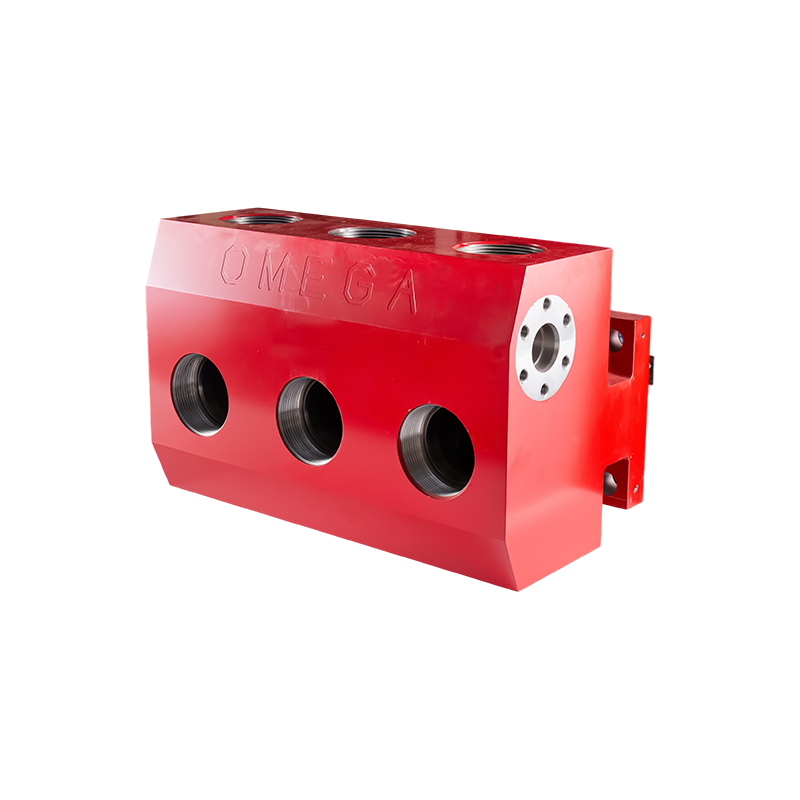
Selecting the right type of seal — and the right material — for a given pressure, fluid chemistry, and duty cycle can double mean time between repairs (MTBR) and cut total ownership cost by 30% or more. This guide breaks down the seal types used in frac pumps, compares their performance at pressures up to 15,000 psi, and provides practical interchangeability data for the most common OEM pump models.
2. Overview of Pump Seal Types: Contact vs Non-Contact Seals
Pump shaft seals divide into two fundamental categories: contact seals, where a stationary element presses against a rotating or reciprocating surface to block fluid, and non-contact seals, which rely on controlled clearances or fluid dynamics to minimize leakage without direct rubbing. For reciprocating plunger pumps in fracturing, contact seals dominate because of the extreme pressures involved, but certain non-contact designs play a support role in auxiliary circuits.
The table below maps the most common seal types to their typical pressure capabilities and leakage behavior. Use it as a first-pass filter when narrowing down options for a specific application.
| Seal Type | Category | Pressure Limit (psi) | Leakage Rate | Maintenance Complexity |
|---|---|---|---|---|
| Packing (gland) | Contact | 15,000 | Controlled (drops/min) | Moderate |
| Single mechanical seal | Contact | 5,000 | Very low | High |
| Double mechanical seal | Contact | 15,000+ | Near zero | Very high |
| Lip seal | Contact | 3,000 | Low to moderate | Low |
| Labyrinth / expeller seal | Non-contact | 300 | High (by design) | Low |
| Magnetic drive (sealless) | Non-contact | 2,000 | Zero | Low (pump-integrated) |
Packing seals remain the workhorse for frac pumps above 5,000 psi because they tolerate some solids, are easy to field-adjust, and fail gradually rather than catastrophically. Mechanical seals, particularly double arrangements with barrier fluid, offer near-zero leakage and are preferred when pumping expensive, hazardous, or low-lubricity fluids. Lip seals and non-contact designs serve primarily in lube oil circuits, coolant pumps, and low-pressure transfer applications.
3. Deep Dive: Mechanical Seal Arrangements (Single, Double, Tandem)
When the conversation turns to “types of seals for pumps,” many engineers immediately think of mechanical seals. In a reciprocating plunger pump, a mechanical seal uses two ultra-flat faces — one rotating with the shaft, one stationary in the housing — that ride on a micro-thin fluid film to create a tight seal. Three basic arrangements define how they are deployed in the field.
Single mechanical seals are the simplest and most economical, consisting of one set of primary faces. They work well with clean, cool, non-hazardous fluids at pressures up to approximately 5,000 psi. Leakage is typically invisible, less than 1 ppm, but if the seal fails, the pumped fluid escapes directly to atmosphere. API Plan 11 (discharge recirculation flush) is the most common support system for single seals in clean water or light hydrocarbon service.
Double seals stack two mechanical seals back-to-back or face-to-face, with a high-pressure barrier fluid circulating between them. This barrier fluid, maintained at 20–30 psi above the stuffing box pressure, ensures that zero process fluid reaches the environment. Double seals are mandatory for sour gas applications (H₂S > 5%) and high-pressure fracturing fluids containing acid or methanol. They can handle pressures exceeding 15,000 psi when the fluid end is designed to accommodate the additional seal housing length. Typical support plans include API Plan 53A (pressurized barrier fluid reservoir) and API Plan 54 (external circulation).
Tandem seals are two single seals installed in series, with an unpressurized buffer fluid between them. The inner seal provides primary sealing, and the outer seal acts as a backup, allowing the pump to continue operating safely if the inner seal fails. Tandem arrangements are common in frac pumps handling proppant-laden slurries where sudden seal face damage is possible. The outer seal runs in a clean buffer, and leakage from the inner seal is detected early via buffer fluid monitoring.
| Arrangement | Pressure Range (psi) | Leakage Path | Typical API Flush Plan | Best Application |
|---|---|---|---|---|
| Single | 0–5,000 | Direct to atmosphere | 11, 21 | Clean water, light oil |
| Double | 5,000–15,000+ | Contained by barrier | 53A, 54 | Sour gas, acid, methanol |
| Tandem | 1,000–10,000 | Detected via buffer | 52, 55 | Proppant slurry, dirty fluids |
4. Packing Seals: When Low Cost Meets High Leakage
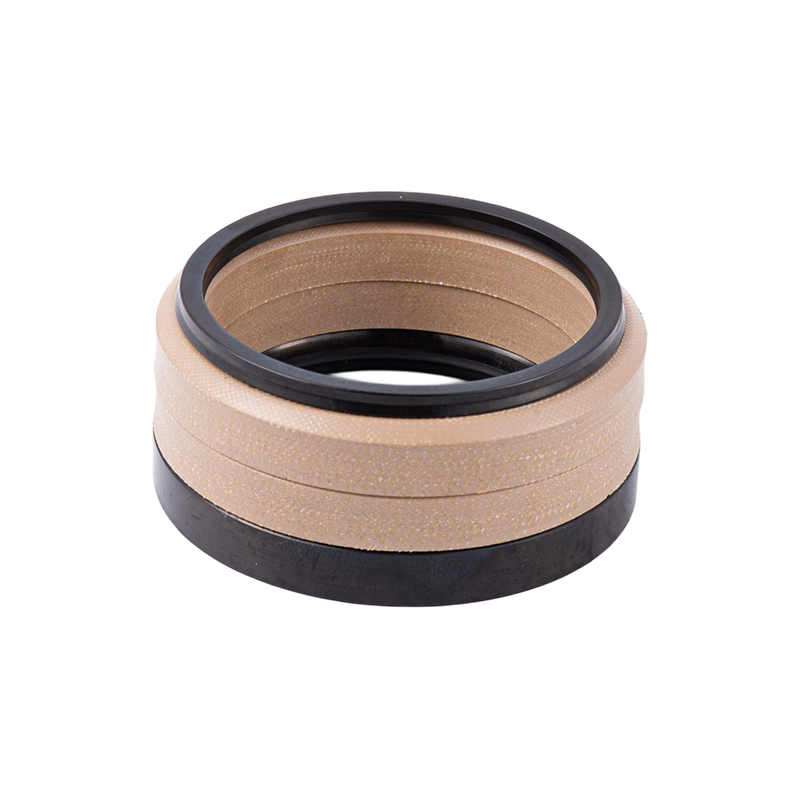
Packing — also called gland packing or stuffing box packing — is the oldest and by far the most common seal type in frac pumps today. A series of braided or molded rings is compressed around the plunger by a gland follower, creating a radial seal that tightens as the nut is torqued. Packing tolerates high pressures, moderate solids loading, and shaft runout that would destroy a mechanical seal in minutes.
The dominant materials in frac packing are die-formed flexible graphite rings, often reinforced with Inconel wire for strength, and PTFE-based rings for lower friction. Aramid fiber packing appears in lower-pressure water transfer pumps. Graphite packing withstands temperatures up to 450°C in non-oxidizing environments and resists most chemicals except strong oxidizers. PTFE packing handles pH 0–14 but softens above 260°C and extrudes under high differential pressure. In a typical 15,000 psi frac pump, packing sets are installed as a multi-ring stack: a lantern ring in the center distributes flush water, cutting rings near the throat handle the high-pressure seal, and a wiper ring at the gland end keeps external contamination out.
Leakage is the price you pay for packing’s simplicity. A properly adjusted set leaks 8–15 drops per minute to lubricate and cool the rings. As the packing wears, leakage increases. At 1,000 hours of pumping, leakage can reach 60 drops per minute, requiring re-torque or replacement. Still, many operators choose frac pump packing seals because a full packing change takes just 45 minutes with basic tools, compared to the 4–6 hour teardown for a mechanical seal replacement.
- Compression ratio: 15–25% of original ring height for initial set; re-torque after first 50 hours.
- Replacement interval: 500–1,200 pump hours depending on fluid cleanliness and pressure.
- Cost per set: $80–$250 for graphite-based rings; higher for hybrid PTFE/graphite sets.
5. Seal Material Selection for Sour Gas & Extreme Temperatures
Chemical compatibility between seal faces, secondary seals (O-rings, gaskets), and the pumped fluid is not optional — it is the difference between a leak-free 5,000-hour run and a catastrophic seal blowout in under 50 hours. Nowhere is this more critical than in sour gas applications, where H₂S concentrations above 5% combine with high chloride brines and temperatures above 150°C to attack common seal materials.
Seal face material pairing is the starting point. Carbon-graphite running against a hard face (silicon carbide or tungsten carbide) forms the baseline for most mechanical seals. In sour gas service, however, graphite absorbs and swells slightly, so a rotary face of silicon carbide against a stationary tungsten carbide seat is preferred. Silicon carbide offers excellent hardness (2,800 Vickers) and corrosion resistance, while tungsten carbide provides toughness against solids impingement. For frac pumps running 15,000 psi with abrasive proppant, diamond-coated silicon carbide faces are increasingly specified to prevent face scoring that leads to rapid leakage.
Elastomeric secondary seals are just as critical. FKM (Viton) provides good resistance to H₂S up to 200°C but swells in high-concentration amine-based corrosion inhibitors. FFKM (Kalrez) handles the combination of H₂S, methanol, and 230°C temperatures, but at 10–20 times the cost of FKM. EPDM is unsuitable for hydrocarbon service but excels in hot water and steam applications. The table below distills material selection into practical ratings.
| Material | Type | H₂S Resistance | Max Temperature (°C) | Wear Resistance | Cost Factor |
|---|---|---|---|---|---|
| Carbon-graphite | Face | Good | 260 | Moderate | 1x |
| Silicon carbide | Face | Excellent | 400 | Very high | 3x |
| Tungsten carbide | Face | Very good | 350 | High | 4x |
| FKM (Viton) | Elastomer | Good | 200 | N/A | 1x |
| FFKM (Kalrez) | Elastomer | Excellent | 230 | N/A | 12x |
| EPDM | Elastomer | Poor (hydrocarbon) | 150 | N/A | 0.5x |
Choosing the right combination — a hard-on-hard face pair with FFKM secondary seals — extends seal life in sour gas wells from 800 hours to over 3,000 hours. It also protects the fluid end itself, because a leaking seal exposes the internal bore wall to acid gas, accelerating stress corrosion cracking at the very intersections that are already the weakest points in the forging. For operators running stainless steel fluid ends, matching the seal material to the fluid end metallurgy is the final piece of a reliability system that resists both corrosion and fatigue.
6. Interchangeability Guide: Seals for SPM, Gardner Denver & Halliburton Pumps
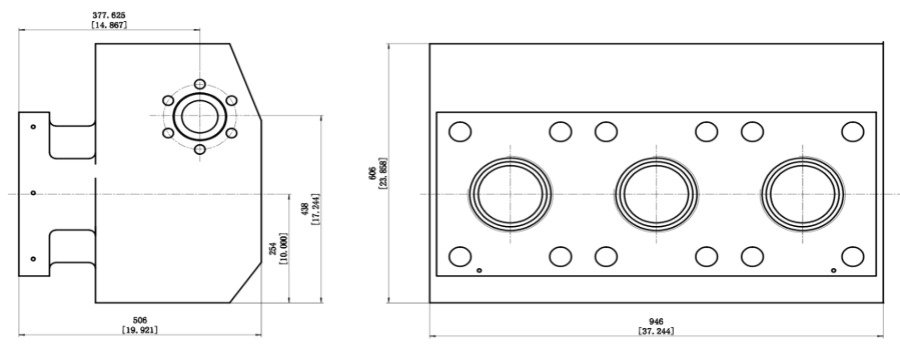
OEM proprietary pricing on seal components can add 40–60% to maintenance budgets compared to equivalent-quality aftermarket seals that meet identical dimensional and material specifications. After years of servicing frac pumps across North American basins, we have mapped the most commonly replaced seal part numbers to our own certified interchangeable components. The table below covers plunger packing sets, D-type sealing rings, valve insert seals, and plunger copper sleeves for the most widely deployed pump models.
Before switching to aftermarket seals, verify the exact pump model and fluid end serial number. Some pumps, particularly the QWS5000 stainless steel fluid ends, use modified seal gland dimensions that differ from earlier QWS3000 models. Our technical support team can help cross-reference any ambiguity.
| Pump Model | Component | OEM Part Number | Aftermarket Equivalent |
|---|---|---|---|
| SPM QWS2500 | Plunger packing set (graphite) | 4P-12345 (example) | QWS2500-PS-GR |
| SPM QWS2800 | Valve insert seal | 4P-22346 | QWS2800-VIS-FFKM |
| SPM QWS3000 | D-type sealing ring | 4P-32347 | QWS3000-DSR |
| SPM QWS5000 | Plunger copper sleeve | 4P-42348 | QWS5000-CS |
| Gardner Denver GD2500 | Packing set (PTFE/graphite) | GD-PS-2500 | GD2500-PS-PTFE |
| Halliburton HT-400 | Valve body gasket | HLB-VG-400 | HT400-VG-AA |
For a complete interchangeability list covering over 50 seal components across SPM, Gardner Denver, and Halliburton pumps, refer to our replacement parts interchangeability guide. We continuously update cross-reference data as field feedback validates new compatible part numbers.
7. How Seal Failure Accelerates Fluid End Damage (and What to Do About It)
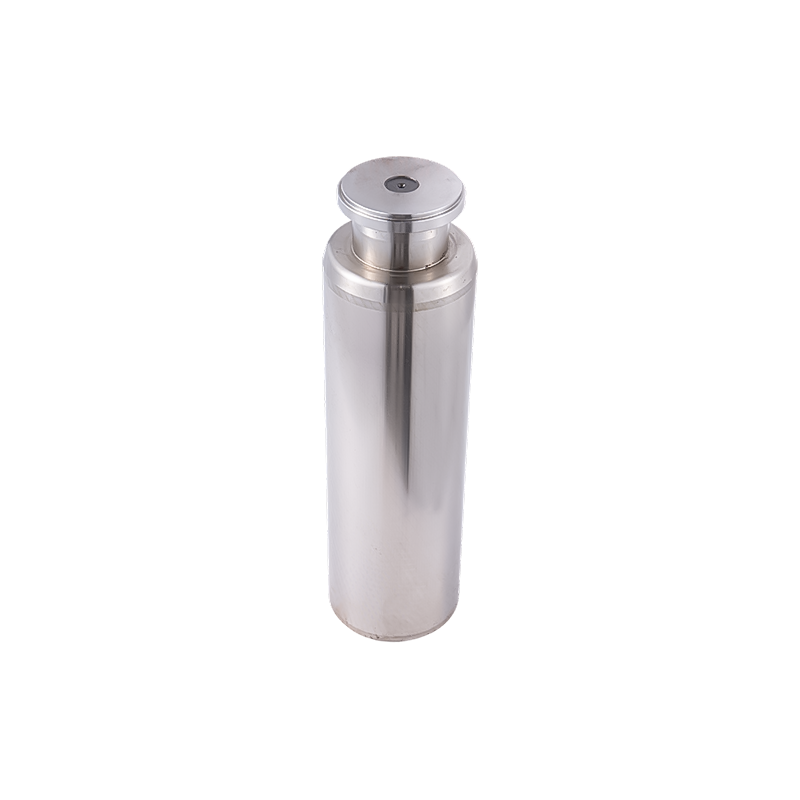
Seal failure does not happen in isolation. A plunger packing that begins to wash out sends a high-velocity jet of abrasive slurry directly onto the plunger surface, cutting circumferential grooves that destroy both the plunger and the new packing that will be installed. Within two packing replacement cycles, the frac pump plunger must be replaced — a $600–$1,200 part.
The damage escalates into the fluid end. Leaking packing allows the pumped fluid to bypass the seal and pressurize the intermediate chamber between the stuffing box and power end. This pressure forces fluid into the power end oil system, contaminating the crankcase and bearings. Simultaneously, the turbulent flow erodes the stuffing box bore, enlarging it until standard packing rings no longer seal properly. At that point, the fluid end must be pulled and the stuffing box rebored or the entire fluid end replaced.
Early warning signals are straightforward if you train your operators to watch for them. Packing leak rate exceeding 30 drops per minute under steady-state conditions, combined with a stuffing box temperature more than 20°C above the fluid end body temperature, indicates imminent failure. Vibration monitoring on the plunger axis also picks up the characteristic waveform of worn packing rings. Integrating seal inspections into the fluid end preventive maintenance checklist — checking stuffing box bore diameter, plunger surface finish, and packing compression at every valve job — catches problems before they propagate into catastrophic failures.
8. Total Cost of Ownership: Comparing Seal Types Over 5,000 Pumping Hours
Pinching pennies on seal selection often costs dollars on the back end. To make an informed decision, pump maintenance managers must look beyond the purchase price of a packing set or mechanical seal and calculate total cost of ownership (TCO) over a realistic operating horizon. The example below assumes a 15,000 psi frac pump operating 5,000 hours per year, with a downtime cost of $10,000 per hour.
Packing seals carry the lowest initial cost but generate the most unscheduled interventions. Over 5,000 hours, a pump running graphite packing will typically require 5–7 packing changes, each taking 1 hour of downtime plus 0.75 hour of labor. That is 9–11 hours of planned downtime annually, plus occasional unplanned stops when packing wears prematurely. In contrast, a double mechanical seal system with barrier fluid may run 3,000+ hours between overhauls, with a 6-hour turnaround per overhaul. The trade-off is the upfront investment: $5,000–$8,000 for the seal assembly vs $200 for a packing set.
| Seal Type | Unit Cost ($) | Changes per 5k hours | Downtime (hrs/yr) | Annual TCO ($) |
|---|---|---|---|---|
| Graphite packing | 200 | 6 | 10 | 102,200 |
| PTFE/graphite hybrid packing | 350 | 5 | 8.5 | 86,850 |
| Double mechanical seal | 7,000 | 1.5 | 9 | 100,500 |
| Tandem mechanical seal | 9,500 | 1.2 | 7.2 | 81,500 |
Remarkably, the high-end tandem mechanical seal offers the lowest annual TCO in this scenario, beating even basic packing by $20,700. The outcome shifts depending on downtime cost per hour. If downtime is pegged at $5,000 per hour, packing becomes the cost leader. At $15,000 per hour, the tandem seal advantage widens to over $40,000. Use these numbers as a template and plug in your own fleet’s actual downtime cost, labor rates, and parts pricing to generate a tailored TCO model. In most high-utilization frac fleets today, the tandem seal’s near-zero unplanned downtime more than earns back its premium.