EN
EN  English
 عربى
عربى हिंदी
हिंदीHandling 15,000 PSI: Design Considerations for Modern Fracking Operations
Apr 10, 2026
Content
Hydraulic fracturing has always been a high-pressure discipline, but the industry's push into deeper, tighter formations has fundamentally changed what "high pressure" means in practice. Operating pressures at or above 15,000 PSI are no longer exceptional — they are increasingly the baseline for ultra-deep unconventional wells and hard-rock formations where conventional stimulation pressures simply cannot propagate fractures effectively. At this pressure level, engineering decisions that are acceptable at 10,000 PSI become potential failure points. Every component in the surface pumping system — fluid ends, valves, manifolds, connections, and seals — must be redesigned, not merely uprated.
Why 15,000 PSI Demands a Different Engineering Approach
The jump from 10,000 PSI to 15,000 PSI is not a linear scaling problem. It represents a 50% increase in working pressure applied to components that are already operating near the limits of their fatigue life, and it coincides with increasingly abrasive and chemically aggressive fracturing fluids. Several factors converge to make this transition genuinely different in engineering terms.
First, geological drivers. Deeper wells — commonly exceeding 15,000 feet of vertical depth in formations such as the Haynesville Shale or the Permian Basin's deeper Wolfcamp intervals — require higher surface injection pressures due to the combined weight of the overlying rock column and the frictional pressure losses in long horizontal laterals. Harder, more compact rock matrices also require greater fracture initiation pressure to overcome natural in-situ stress. In the most challenging scenarios, surface treating pressures routinely exceed 12,000 to 15,000 PSI to achieve effective fracture propagation at depth.
Second, equipment classification thresholds shift significantly at 15K. Under API Specification 6A, the transition from 10,000 PSI to 15,000 PSI moves equipment into a higher pressure class requiring Type 6BX flanges with pressure-energized BX ring gaskets, stricter Product Specification Level (PSL) requirements, and tighter dimensional tolerances on all sealing surfaces. Standard ASME B16.5 flanging — adequate for many lower-pressure oilfield applications — is not rated for these service conditions and cannot be substituted. The engineering and procurement implications of this reclassification are substantial and must be addressed at the design stage, not during commissioning.
Fluid End Design: The Core Challenge
The fluid end is the most mechanically stressed component in any high-pressure pumping system. It is the point where low-velocity, high-volume fluid from the suction manifold is compressed and discharged at extreme pressure through a series of rapidly cycling valves — typically at rates of 3 to 6 strokes per second during active pumping. In a triplex or quintuplex plunger pump operating at 15,000 PSI, every component within the fluid end block is subjected to this full cyclic load hundreds of thousands of times over the course of a single job.
The most critical structural challenge in fluid end design is the bore intersection — the point where the vertical valve bore crosses the horizontal plunger bore within the block. This intersection creates a stress concentration that is the primary initiation site for fatigue cracking. At 15,000 PSI, the stress amplitude at these intersections is significantly higher than at lower operating pressures, and the fatigue life of the block decreases accordingly unless geometry is deliberately optimized. Precision machining of the intersection radius, controlled surface finish, and the application of appropriate internal taper angles are all critical design variables that differentiate a high-performance 15K fluid end block from one that will develop fatigue cracks within a few hundred operating hours.
Fluid end geometry also affects valve performance. At 15,000 PSI, the differential pressure acting across each suction and discharge valve is extreme. Valve seat geometry must be precisely matched to the valve body to achieve a reliable seal under this load without generating the localized stress that causes washout — the progressive erosion of the fluid end block surface around a valve seat that is the second most common cause of premature fluid end failure after fatigue cracking.
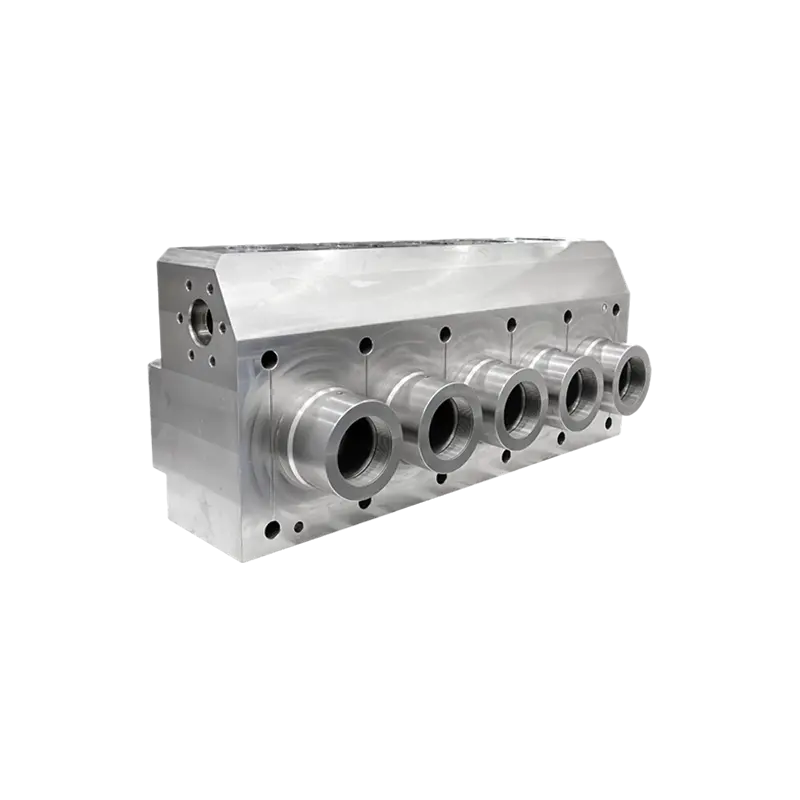
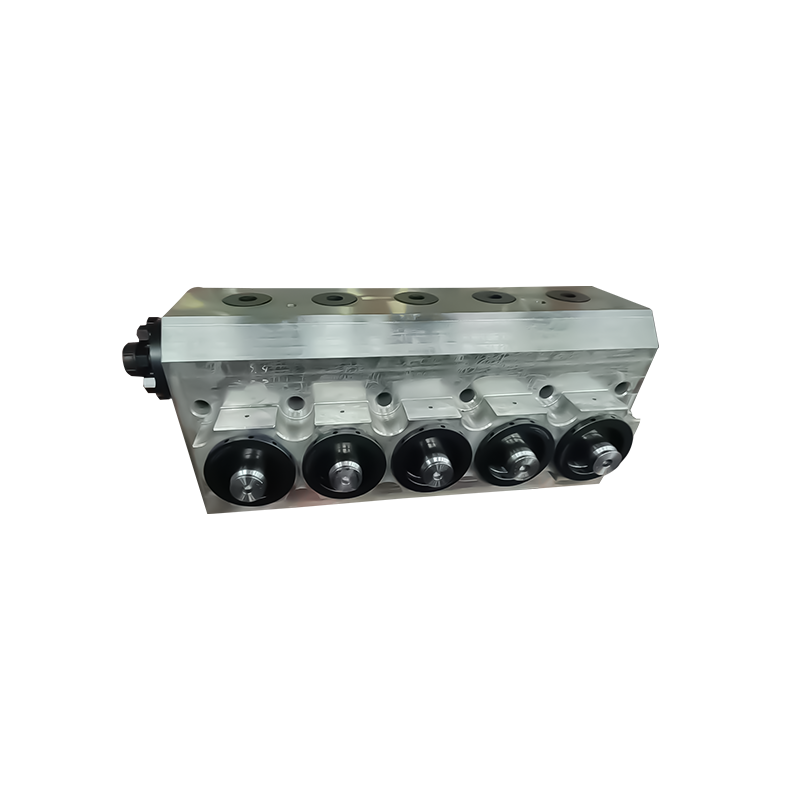
For operators and equipment managers evaluating pump systems, selecting purpose-designed frac pump fluid ends rated and tested specifically for 15,000 PSI service — rather than standard blocks nominally uprated through pressure testing alone — is the single most impactful decision for managing fluid end service life at this pressure class.
Material Selection for Extreme-Pressure Service
The material used to manufacture a fluid end block directly determines its fatigue life, corrosion resistance, and resistance to the combined erosive and chemical attack of modern fracturing fluids. This has driven a fundamental shift in material selection over the past fifteen years.
Carbon steel fluid ends — historically the industry standard — have a typical service life of 450 to 500 hours under aggressive 15,000 PSI pumping conditions. Carbon steel is adequate for lower-pressure applications and offers cost advantages, but its fatigue resistance and corrosion resistance are insufficient for sustained high-cycle operation at the top of the pressure envelope, particularly when fracturing fluids contain acidizing chemicals, high chloride concentrations, or H₂S.
Precipitation-hardened stainless steels — specifically 17-4PH and 15-5PH — have become the material of choice for 15K fluid end blocks, with demonstrated service lives of 800 to 3,000 hours depending on operating conditions and maintenance practices. These alloys offer substantially higher tensile and fatigue strength than carbon steel while providing meaningful corrosion resistance against the chemical environment inside a pressurized fluid end. For service environments involving sour gas (H₂S), duplex stainless steels or CRA (corrosion-resistant alloy) materials conforming to NACE MR0175 / ISO 15156 must be specified — standard 17-4PH is not rated for high-H₂S partial pressure service.
Beyond alloy selection, the manufacturing process itself affects material performance at 15,000 PSI. Fluid end blocks manufactured from electro-slag remelted (ESR) feedstock have a more uniform metallographic structure and chemical composition than those produced from conventional ingot or scrap-based steelmaking. ESR processing eliminates macro-segregation and significantly reduces the density of non-metallic inclusions — both of which act as fatigue crack initiation sites under cyclic high-pressure loading. For 15K applications, specifying ESR-quality feedstock is a meaningful upgrade that translates directly into reduced cracking incidence and extended block life.
Valve seats and related hard-contact components require separate material consideration. Because valve seats are typically two to three times harder than the fluid end block surface, mismatched hardness between seat and block — or the introduction of abrasive particles between a seated valve and the block taper — causes localized damage that progresses rapidly into washout. Tungsten carbide hardfacing or ceramic seat inserts are increasingly used in 15K applications to manage this mismatch and extend the interval between seat replacements.
Valves, Seats, and Manifold Integrity at 15K PSI
Every connection, flange, and valve in the surface treating iron between the pump discharge and the wellhead represents a potential failure point at 15,000 PSI. The pressure forces acting on a 3-inch bore at 15,000 PSI exceed 100,000 pounds of axial load on each connection — a figure that puts strict requirements on flange design, gasket specification, and make-up torque.
API 6A Type 6BX flanges are the correct specification for 15,000 PSI surface treating service. These flanges use pressure-energized BX ring gaskets that generate a sealing force proportional to internal pressure — the higher the pressure, the tighter the seal. This self-energizing characteristic makes 6BX connections significantly more reliable under pressure cycling than standard ring-type joint (RTJ) connections, which can relax and leak over repeated pressurization cycles. Using 6B-type flanges or non-API connections at 15,000 PSI is a serious engineering error — one that is sometimes made when operators adapt lower-pressure surface equipment to higher-pressure service without a full design review.
Plug valves and gate valves used in frac manifolds at 15,000 PSI must be monogrammed to API Spec 6A and rated to the appropriate PSL level for the service. For abrasive frac fluid service, metal-to-metal seating surfaces with tungsten carbide or nitrided trim provide significantly better wear life than elastomeric-seat designs. Choke valves used for pressure control during flowback or well testing at 15K must use ceramic or hard-alloy throttle nozzles to resist the erosive effect of produced formation sand and proppant carried in the flowback stream.
High-pressure frac hoses connecting pump discharge to the treating iron — typically rated for 15,000 to 20,000 PSI — should use mechanically crimped end fittings rather than bonded connections. Crimped hose assemblies maintain integrity under the combination of pressure cycling, thermal cycling, and chemical exposure that characterizes active frac operations, where bonded fittings may degrade. Burst pressure ratings for these hoses are typically set at four times the working pressure, providing a 4:1 safety margin that should not be compromised by using hoses rated below the actual maximum treating pressure.
Managing Service Life and Minimizing Downtime
At 15,000 PSI, unplanned fluid end failures are among the most disruptive and expensive events in a frac operation. A cracked block or blown valve seat can halt a stage mid-treatment, requiring emergency iron changes under pressure, potential workover complications, and the cost of a failed or incomplete stimulation stage. Managing fluid end life proactively is therefore not a maintenance preference but an operational necessity.
The industry average fluid end service life across all pressure classes is approximately 1,600 hours. At 15,000 PSI with abrasive slickwater or crosslinked gel fluids, carbon steel blocks will typically fall well below this average. Stainless steel blocks in equivalent service regularly exceed it, with best-in-class designs achieving 2,500 hours or more. The economic case for stainless steel fluid ends at 15K is straightforward: the premium purchase price is recovered in reduced replacement frequency and fewer unplanned downtime events within the first two or three replacement cycles.
Modular fluid end designs — where individual cylinder modules can be replaced independently rather than requiring full block replacement — offer a meaningful operational advantage at this pressure class. When a single bore develops a fatigue crack or washout, a modular design allows targeted replacement of only the affected section, reducing both parts cost and the time the pump is out of service. Mono-block designs remain common and offer structural advantages in some configurations, but the downtime cost of replacing an entire block when only one bore has failed is increasingly difficult to justify at 15K operating pressures where both parts cost and lost pumping time are significant.
Effective maintenance practice at 15,000 PSI includes scheduled inspection of valve seats and plunger packing at defined hour intervals rather than run-to-failure. Valve seats should be inspected at every fluid end service for signs of erosion, cracking, or debris contamination between the seat taper and the block surface. Plunger packing wear increases significantly at 15K compared to lower-pressure service, and packing replacement intervals should be adjusted accordingly. Maintaining a spare fluid end assembly on location — ready to swap as a complete unit — is standard practice for continuous operations and should be factored into fleet planning for any 15,000 PSI pumping program.